
Convex AI Systems

AI system design and integration

AI System Design & Integration

Turn Requirements Into a Buildable System

Once the right opportunity has been identified, the next step is designing how the system will actually work.

Convex AI Systems maps the workflows, data flows, integrations, logic, controls, and technical requirements needed to turn a validated business need into an implementation-ready system.

The result is a clear technical plan that can be reviewed, scoped, tested, and built without relying on assumptions.

What This Service Includes

We translate validated business requirements into a documented system architecture — defining what connects, how information moves, what the system needs to do, and what is required for implementation.

ai workflows

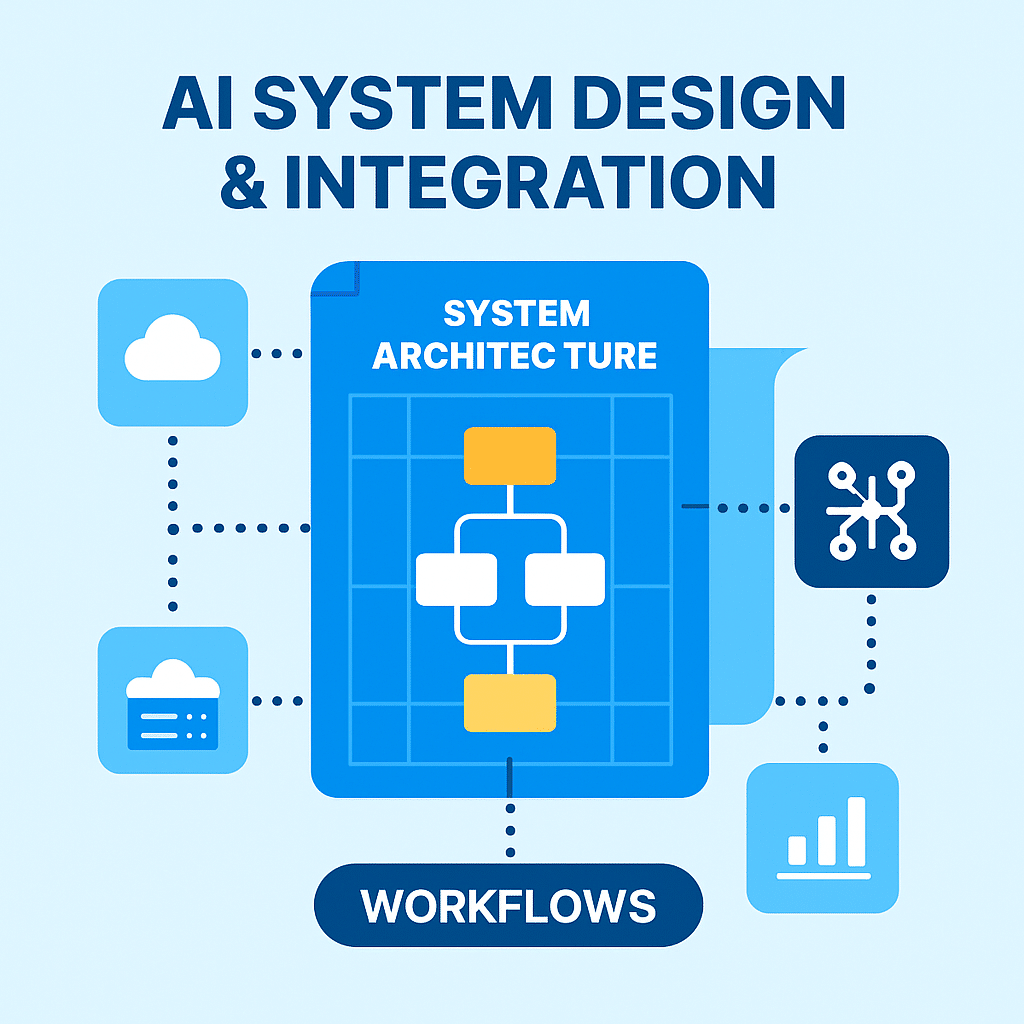
Integration Blueprint

A visual map showing the systems, workflows, data sources, integrations, and key connections involved in the proposed solution.

ai workflows

Technical Scope

Clear documentation of system requirements, integration points, workflow logic, dependencies, constraints, and implementation considerations.

ai workflows

Implementation Plan

A structured sequence for building, connecting, testing, and deploying the approved system.

ai workflows

Validation & Testing Requirements

Define how critical workflows, integrations, outputs, exceptions, and controls should be tested before full deployment.


Our AI System Design Process

We design around the validated business requirement first, then select the architecture and technology needed to support it.

01

Define Objectives

Confirm the business objective, users, workflows, constraints, success criteria, and requirements established during discovery or the readiness assessment.

02

Map Workflows

Document how information moves between people, processes, software, data sources, and decision points.

03

Define the Architecture

Determine the appropriate system components, integration methods, AI capabilities, automation logic, and technical dependencies.

04

Design Integrations & Controls

Define triggers, data handling, authentication, permissions, exception handling, human review points, and other controls required for reliable operation.

05

Finalize the Implementation Plan

Document the approved architecture, scope, testing requirements, implementation sequence, and responsibilities so development can proceed from a defined plan.

Example System Design

A system design engagement might involve a manufacturer that needs its sales, order management, and production workflows to exchange information more efficiently.

Example requirements could include:

  • Mapping data between sales and operations
  • Connecting existing business systems through available integrations or APIs
  • Automating appropriate order-status updates
  • Defining where AI could assist with analysis or reporting
  • Establishing validation and human-review points
  • Documenting exceptions and error-handling requirements


Why Structured Design Matters

Building integrations without first defining the architecture can create unnecessary complexity, fragile workflows, security issues, and expensive rework.

Structured AI system design establishes how each component should interact before implementation begins. It gives developers, stakeholders, and decision-makers a shared technical reference for what is being built and why.

A defined architecture provides:

  • Clear data and workflow paths
  • Documented integration requirements
  • Defined decision and exception logic
  • Appropriate security and access considerations
  • Testing requirements before deployment
  • A foundation that can be maintained and expanded over time
manufacturing firm

Measurable Outcomes

System Architecture A clear picture of how the proposed solution fits together
Integration Planning Defined connections between systems, workflows, and data
Implementation Scope Clearer requirements for estimating and building the system
Risk Management Dependencies, constraints, exceptions, and controls identified before deployment
Testing Defined requirements for validating the system before launch
Future Development Documentation that supports maintenance, changes, and expansion

Deliverables You Receive

Integration Blueprint

Visual documentation of the proposed architecture, workflows, systems, integrations, and data movement.

Technical Scope

Documented requirements covering integrations, workflow logic, dependencies, controls, constraints, and implementation considerations.

Implementation Plan

A structured sequence for development, integration, validation, testing, and deployment.

Testing Requirements

Defined criteria for validating critical workflows, outputs, exceptions, integrations, and human-review points before launch.

Convex

Request Your Integration Plan

If you’ve identified a valid AI or automation opportunity, the next step is defining exactly how it should be built. Tell us about the process, systems, and requirements involved. We’ll review your current situation and determine the appropriate next step for system design and integration.
Fill out the form below and we’ll review your current setup. You’ll receive a detailed proposal within 1–2 business days.

We respond within 24 hours. No automated replies — a real person reviews your request.